
The real estate sector is undergoing a significant transformation driven by changing user expectations, technological developments, and environmental considerations. Today, the quality of a building is increasingly evaluated not only through its architecture and functionality but also through its energy performance, resource consumption, and environmental impact.
Sustainable building practices are at the center of this transformation. By promoting more efficient use of energy and natural resources, sustainable buildings can contribute not only to reducing environmental impacts but also to improving user comfort, operational efficiency, and the long-term quality of real estate assets.
At ADRA GYO, we consider sustainability an important component of our real estate investment and development approach, with an emphasis on projects that address today's requirements while also considering future standards of living and use.
What Does Sustainability Mean in Real Estate?
Sustainability in real estate refers to planning a building's entire life cycle—from design and construction to operation and use—with consideration for its environmental, economic, and social impacts.
This approach extends beyond developing buildings that consume less energy. A property's relationship with its surroundings, material selection, water consumption, waste management, indoor environmental quality, and long-term usability are all part of sustainability.
A sustainable real estate approach considers:
Energy and resource efficiency,
Reduction of environmental impacts,
Durable and long-lasting building solutions,
User health and comfort,
Efficient operation and maintenance.
The Growing Importance of Energy Efficiency
The energy requirements of buildings are an important factor in both their environmental impact and operating expenses.
Appropriate building orientation, effective insulation, high-performance façade solutions, natural lighting, and efficient climate-control systems can contribute to better management of energy demand.
An energy-efficient building approach can help:
Reduce heating and cooling requirements,
Manage electricity consumption more effectively,
Control operating expenses,
Use natural resources more efficiently,
Reduce the environmental impact of buildings.
Energy performance is therefore becoming an increasingly important consideration from the earliest design stages of modern real estate projects.
Efficient Use of Resources
One of the fundamental principles of sustainable real estate development is the efficient use of natural resources.
Reducing water consumption, selecting appropriate materials, managing waste, and designing buildings for long-term use are important components of this approach.
In particular, choosing durable materials that are suitable for their intended purpose can help reduce maintenance and renovation requirements throughout a building's life cycle.
Sustainability therefore extends beyond the construction phase and encompasses the entire long-term operation and use of a property.
User Expectations Are Changing
The expectations of real estate users are also evolving. In residential properties, quality of life and healthy indoor conditions are becoming increasingly important, while commercial buildings may place greater emphasis on employee comfort, efficient spaces, and operational performance.
Natural light, indoor air quality, thermal conditions, acoustic comfort, access to green spaces, and functional space planning can directly influence the user experience.
Sustainable building practices therefore include human-centered design alongside environmental performance.
Well-planned living and working environments can:
Support user comfort,
Improve indoor environmental quality,
Enable more efficient use of space,
Facilitate adaptation to changing user needs,
Contribute to the attractiveness of a property.
Technology and Smart Building Systems
Technological developments are enabling sustainable real estate strategies to be implemented more effectively.
Smart building systems can manage energy consumption, lighting, climate control, and other building functions according to actual usage requirements. Sensors and automation technologies can also help monitor resource consumption and identify opportunities for improved efficiency.
When properly integrated into a project, these technologies can make building operations more measurable and manageable while enhancing the user experience.
Sustainable design and technological infrastructure are expected to become increasingly integrated in the real estate assets of the future.
Sustainability and Long-Term Real Estate Value
Long-term real estate value depends on more than a property's current physical characteristics. A building's ability to adapt to future user expectations and evolving technical standards is also important.
Properties with strong energy performance, efficient operations, and the ability to respond to user needs may remain more functional over the long term.
A sustainability-focused approach can contribute to:
Supporting operational efficiency,
Extending the effective life of a building,
Adapting to changing user expectations,
Maintaining the competitiveness of real estate assets,
Supporting long-term value creation potential.
Sustainability is therefore becoming not only an environmental consideration but also a strategic factor in real estate investment decisions.
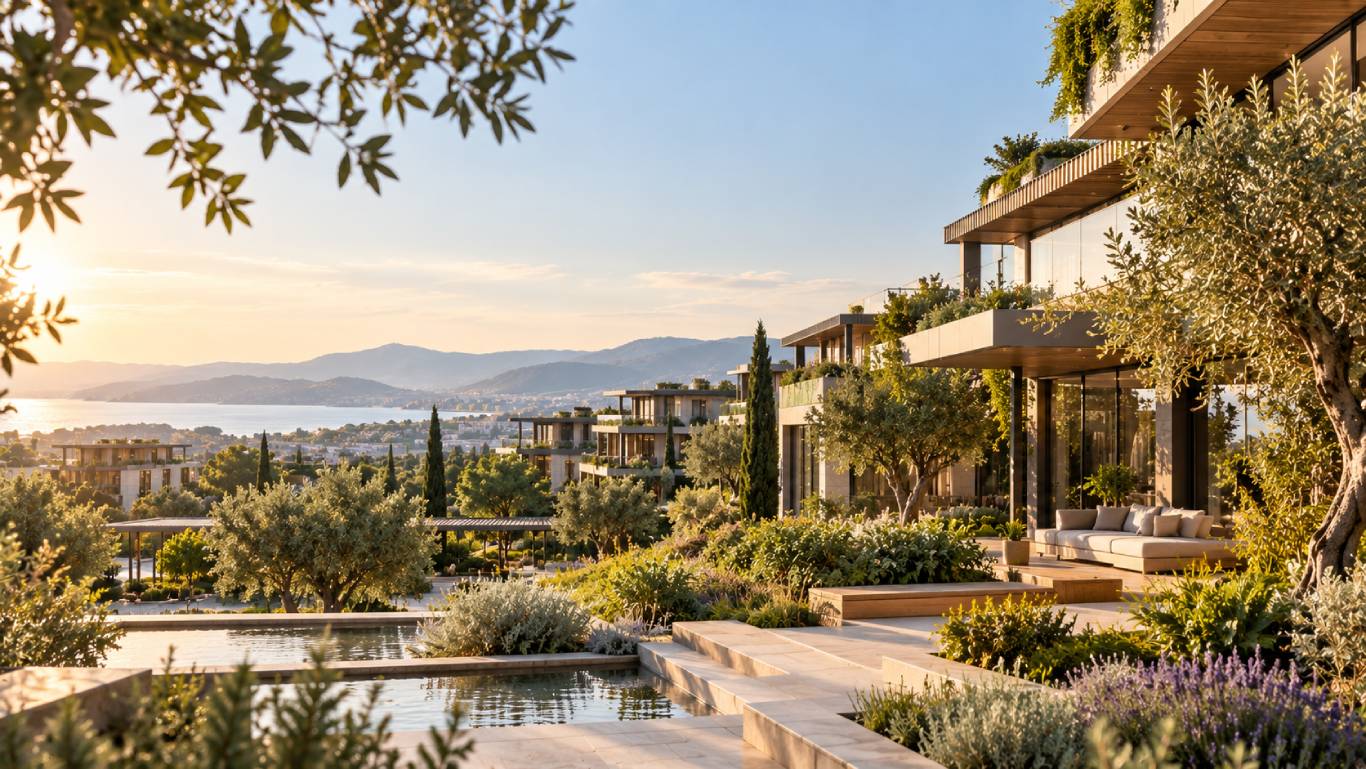
Developing Real Estate in Harmony with Cities
Sustainable real estate is not limited to the performance of an individual building. The relationship between a development and its surrounding city is also important.
Access to public transportation, pedestrian connections, green spaces, efficient use of existing infrastructure, and integration with surrounding functions can help projects establish stronger connections with the urban environment.
This approach can contribute not only to more efficient buildings but also to more balanced and livable urban areas.
ADRA GYO's Sustainability Approach
At ADRA GYO, we view sustainability as an important component of our long-term value creation approach.
In our real estate investment and development activities, we consider not only current requirements but also the ability of projects to respond to evolving environmental, technological, and user expectations.
Within this approach, we consider:
Energy and resource efficiency,
High-quality and durable building solutions,
User-oriented design,
Development in harmony with the surrounding environment,
Effective asset management,
Long-term value creation.
Our objective is to combine sustainability principles with high-quality real estate development to create projects capable of generating lasting value for both their users and their surroundings.
Conclusion
Sustainable buildings are becoming an important part of the transformation taking place across the real estate sector. From energy and resource efficiency to user comfort, technological infrastructure, and long-term operational performance, numerous factors are shaping a new generation of real estate.
This transformation is moving sustainability beyond a purely environmental consideration and making it a strategic component of real estate investment and development.
ADRA GYO integrates sustainability with high-quality development, effective asset management, and long-term value creation, with the objective of developing real estate assets capable of adapting to the needs of the future.