

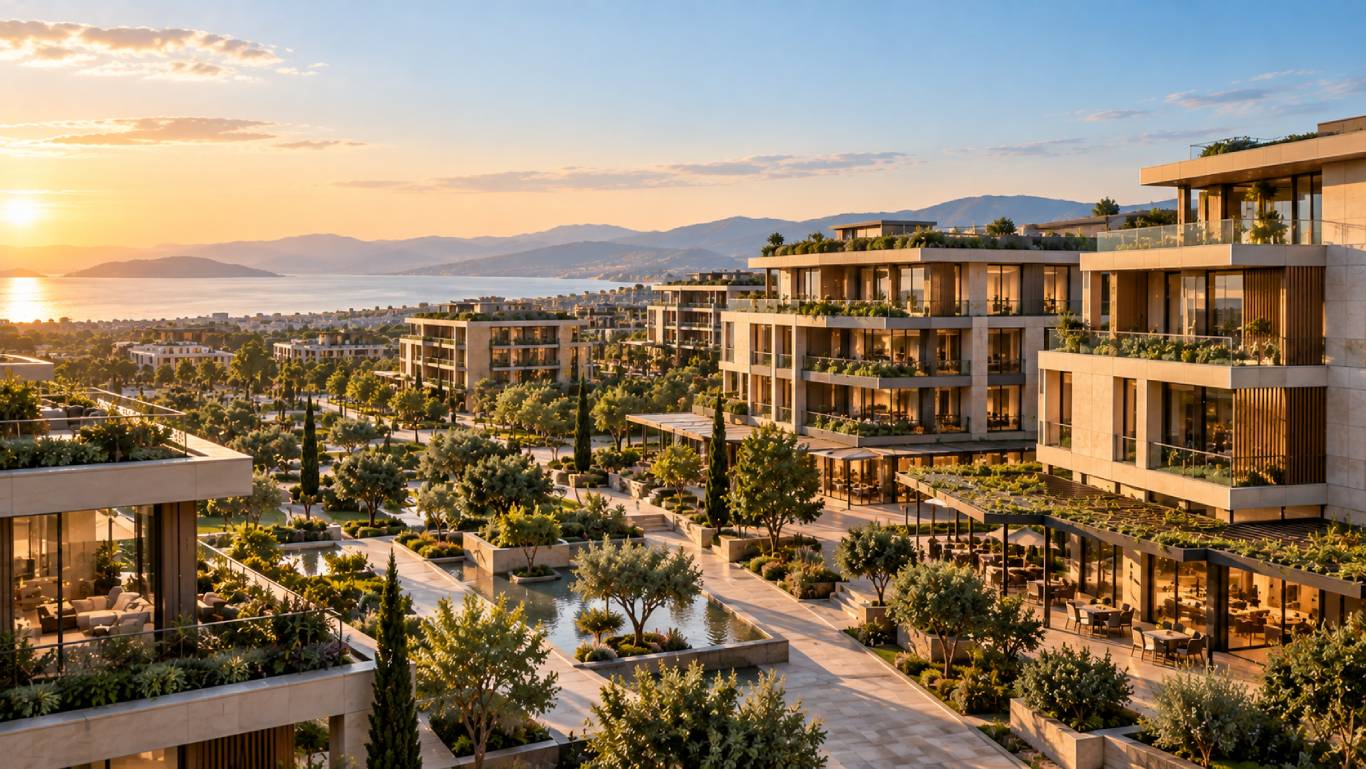
The value of a real estate project cannot be explained solely by its size, architecture, or location. Developing high-quality real estate requires many factors to be considered together, from location selection and project concept to architectural design, technical infrastructure, user requirements, and the development potential of the surrounding area.
Planning these elements in harmony can influence both the current quality of a property and its potential to create long-term value. Real estate development is therefore about more than constructing a building; it is about creating an asset that establishes the right relationship with its surroundings and intended users.
At ADRA GYO, we evaluate real estate projects from a broader perspective, considering location, architecture, functionality, sustainability, and long-term development potential as interconnected elements.
Location and Surrounding Development
Location is one of the fundamental factors influencing the value of a real estate project. However, location should not be assessed solely on the basis of a property's address or district.
Transportation connections, social and commercial amenities, surrounding development, infrastructure investments, and the future direction of the area can all influence the quality of a location.
Location analysis should consider:
Transportation and accessibility,
Social and commercial amenities,
Regional infrastructure,
Existing surrounding development,
Planned developments,
Long-term transformation potential.
Bringing the right project function together with the right location can significantly support a property's use potential.
Architectural Design and Project Quality
Architectural design determines not only the appearance of a project but also the way users interact with the building.
High-quality real estate requires a balanced relationship between aesthetics and functionality. Appropriate spatial planning, efficient circulation, use of natural light, and integration with the surrounding environment can directly influence the user experience.
High-quality architecture can:
Enable more efficient use of space,
Support user comfort,
Give a project a distinctive identity,
Create spaces capable of meeting different needs,
Support the long-term quality of a property.
Architectural quality is therefore one of the fundamental elements of value in the development process.
Functionality and User Requirements
For a real estate project to perform effectively, it should respond to genuine needs within its location.
Residential, office, retail, logistics, and mixed-use developments each serve different user profiles and requirements. The target audience and local demand should therefore be carefully considered when determining the project concept.
For example, flexible workspaces and technological infrastructure may be important in an office project, while functional living spaces, amenities, and user comfort may carry greater importance in a residential development.
Selecting the appropriate function supports a project's ability to respond to both current and future user requirements.
Technical Infrastructure and Building Quality
The technical characteristics of a building are another important component of real estate quality.
From structural systems and mechanical and electrical infrastructure to insulation and material selection, numerous technical factors can influence safety, comfort, energy performance, and the useful life of a property.
Selecting high-quality materials appropriate for their intended use can:
Support building durability,
Help manage maintenance requirements,
Improve user comfort,
Contribute to energy performance,
Support long-term usability.
Technical quality should therefore be considered throughout the building's entire life cycle rather than solely in terms of initial development cost.
Accessibility and Transportation
Time is an important consideration in both everyday life and commercial activity. A property's access to key destinations can therefore influence user preferences.
Connections to major roads, public transportation, business districts, social areas, and other important destinations can improve the convenience of a development.
Particularly in larger urban areas, where travel times can significantly affect daily life, accessibility has become an important factor in real estate evaluation.
However, accessibility does not simply mean being located in a central area. The direction of urban growth and new transportation investments can change the accessibility of different locations over time.
Social Spaces and Environmental Quality
User expectations in modern real estate projects extend beyond the physical characteristics of individual units.
Landscaped areas, shared spaces, pedestrian environments, social amenities, and a project's relationship with its surroundings can all influence the overall quality of use.
Particularly in residential and mixed-use projects, well-planned shared areas can contribute significantly to the everyday user experience.
A high-quality surrounding environment can also help a development establish a stronger relationship with its location and maintain its attractiveness over the long term.
Energy Efficiency and Sustainability
Energy and resource efficiency are becoming increasingly important considerations in modern real estate development.
Appropriate building orientation, effective insulation, natural lighting, efficient mechanical systems, and suitable material selection can all contribute to operational performance.
Sustainability also encompasses water consumption, landscape design, material choices, and building longevity.
In addition to reducing environmental impacts, these factors can support operational efficiency and help properties adapt to changing user expectations.
Adapting to Changing Needs
Real estate assets have long useful lives, while the ways people live, work, and consume can change significantly over time.
Projects should therefore be designed not only for current requirements but also with potential future use scenarios in mind.
Flexible planning, upgradeable technological infrastructure, and spaces that can adapt to different needs can support long-term functionality.
Projects capable of adapting to change may remain more functional for users throughout their economic life.
ADRA GYO's Value Creation Approach
At ADRA GYO, we do not assess the value of a real estate project through a single criterion.
Our investment and development processes consider a combination of factors ranging from location and architecture to technical quality, functionality, sustainability, and future development potential.
Our approach is centered on:
Strategic location selection,
High-quality and functional architecture,
A clear understanding of user requirements,
High standards of construction and implementation,
Sustainable and efficient solutions,
Long-term usability and value creation potential.
Our objective is not merely to develop physical structures, but to create real estate assets that integrate with their surroundings, respond to user needs, and maintain their quality over the long term.
Conclusion
The value of a real estate project is shaped by the interaction of many different factors. Location, architectural design, functionality, technical quality, accessibility, environmental quality, and sustainability are among the most important.
Successful real estate development requires these criteria to be considered not independently but through a comprehensive planning approach.
ADRA GYO aims to develop high-quality, functional real estate projects with long-term value creation potential by considering both today's requirements and the expectations of the future throughout its investment and development processes.